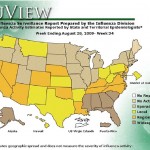
 As anyone who has watched or read the news recently is surely aware, state, federal, and world officials have been busy grappling with what could prove to be a substantial challenge to public health across the globe. In April of this year, findings of a new strain of the H1N1 influenza first emerged in Mexico. Since that time, cases have been reported in more than 168 countries throughout the world, and the World Health Organization (WHO) has declared the outbreak to be a pandemic. Although the virus is popularly called the “swine flu,” concern that this term causes confusion about how the virus is spread (there is no danger in eating well cooked pork) has led WHO and other organizations to refer to the virus as “influenza A (H1N1)” instead. In the United States, nearly 70,000 cases of H1N1 flu have been reported this year, with at
least 556 deaths so far. Georgia has not been immune. The Department of Community Health (DCH) reports that as of August 26, there have been 147 H1N1 related hospitalizations and four deaths in the state so far. Of course, influenza is a common killer every year across the globe, so what makes this latest strain different and what can be done to lessen its damage?
How serious is the threat?
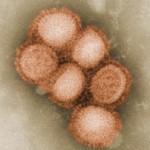 Medical experts agree that the H1N1 virus poses a significant threat to public health, although there is still some debate about how severe this pandemic is likely to be. In a typical flu season, up to 20 percent of the general public becomes infected (not all exhibiting symptoms) and 36,000 people die annually. However, on August 24, the President’s Council of Advisors of Science released a report that described a grim plausible scenario of 30 to 50 percent of the U.S. population becoming infected this fall and winter with the H1N1 virus and 20 to 40 percent of the population exhibiting symptoms. At least half of these symptomatic individuals would seek medical attention, culminating in 1.8 million hospital admissions throughout the nation. In all, H1N1 could result in a death toll of 30,000 to 90,000 in the United States alone.
After this dire report received a great deal of media attention, the Centers for Disease Control’s (CDC) head, Dr. Thomas Frieden, stated that this scenario is unlikely to become a reality, so long as the virus maintains its current pattern. So far, H1N1 has not been any deadlier than the average flu seen each year. As winter comes to an end in the Southern Hemisphere, experts have been relieved to find that the impact of the H1N1 virus has not been as heavy as had once been feared. Even more encouraging, genetic tracking over the past few months has not found any signs that the virus is mutating into a more dangerous strain.
While the H1N1 flu so far is not significantly deadlier than the seasonal flu virus, what has alarmed medical experts is the demographics of the virus’s victims. The typical flu’s fatalities occur mainly in the elderly population. With H1N1, however, infections are 20 times more common among individuals ages five to 24 than in persons over 65. While about 80 to 100 children in the U.S. die each flu season, approximately three dozen children have died already this year, according to the CDC. Besides young people, pregnant women are also vulnerable; although they make up only one percent of the U.S. population, pregnant women have composed six percent of H1N1 deaths. Other at-risk populations include persons with chronic conditions such as neurological disorders, respiratory disease, and diabetes.
As with any flu, it is important for the general public to recognize the symptoms and to know when to stay home from school or work. H1N1 flu symptoms are similar to ordinary flu symptoms and can include fever, cough, sore throat, body aches, headache, fatigue, chills, and, less often, diarrhea or vomiting. Although fever is commonly thought to be a classic symptom of the flu, health officials caution that an absence of fever is no guarantee that a person is not infectious. According to CDC estimates, ten to 40 percent of infected individuals do not experience fever, possibly leading to a greater risk of spreading the disease because these persons do not realize they need to stay home.
Recommendations for the Public
With children disproportionately affected by this virus, public health officials have been carefully considering the question of the role of schools in spreading