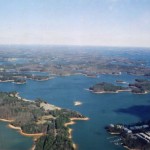
 “When the well’s dry, we know the worth of water,” observed Benjamin Franklin in 1774. Our state certainly understands its worth, as we have been waging a water war with our neighbors for more than two decades. We all remember the devastating drought in 2007 when Governor Perdue declared a water supply emergency in north Georgia when water resources dwindled to a dangerously low level. Georgia has taken steps to manage its water resources by developing a comprehensive drought response plan and a Statewide Water Management Plan. However, the water war reached a boiling point in July when U.S. District Judge Magnuson ruled that water supply, in the form of withdrawals from Lake Lanier, was not a Congressionally-authorized purpose of Lake Lanier. Authorized purposes were hydropower, navigation, and flood control – water supply was only an “incidental benefit.” The Judge delayed enforcement of the ruling for three years to give Congress time to authorize water supply as a purpose for Lake Lanier. At the end of three years, if there is no resolution, the operation of Buford Dam on Lake Lanier will return to 1970s baseline levels. Thus, the required water flow from the dam will be 600 cubic feet per second (cfs) and only Gainesville and Buford will be allowed to withdraw water from the lake (eight million gallons for Gainesville and two million gallons for Buford).
In his ruling, Judge Magnuson documented a detailed history of Lake Lanier. Two feasibility reports, the Parks Report and the Newman Report, noted hydropower and navigation as direct benefits. The Southeastern Power Administration (SEPA) ultimately paid approximately $30 million towards construction of the dam. Even though Atlanta did not contribute to the construction costs, Congressional hearings showed that Atlanta was not required to pay because water supply was an incidental benefit in the form of regulation of the Chattahoochee River’s flow. The cities of Buford and Gainesville were authorized to withdraw small amounts of water from the lake because their original water intake structures on the Chattahoochee River were inundated by Lake Lanier. The Corps’ 1958 operation manual provided for releases of 600 cfs from Buford Dam; however, the Corps agreed to additional withdrawals and a flow of 750 cfs in 1975. A drought in 1980 and 1981 caused the Corps to re-evaluate its operation of the dam, agreeing to provide minimum releases of 1750 cfs at the request of Georgia Power during the summer months.
Furthermore, despite the fact that only Buford and Gainesville were authorized to withdraw water, both Gwinnett County and the City of Cumming contracted with the Corps to withdraw water in the 1970s. In 1981, a U.S. Senate-directed
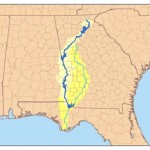 Atlanta water study was completed. It found that Lake Lanier and the Chattahoochee River provided more than 90 percent of the total water supply for metro Atlanta, and it recommended a new dam below Lake Lanier. Alternatively in 1989, the Corps determined that the most economical solution was reallocation of storage of Lake Lanier to water supply. This determination was included in a 1989 draft Water Control Plan, however; it was never adopted because in 1990, Alabama filed suit challenging the plan and the water supply contracts. This is the lawsuit that began the “water wars.”
Based on the fact that water supply contracts reallocated more than 20 percent of Lake Lanier storage, Judge Magnuson’s ruling in July of this year, states that the Corps’ actions to support water supply constitutes a “major operational change” and “seriously affects” Lake Lanier’s authorized purpose.
Our state insists that the Court take into account return flows, which are water the municipalities return to the lake and the Chattahoochee River in the form of highly treated wastewater. In recent years, metro Atlanta’s average net water use from the Chattahoochee is roughly 1 percent of the average annual flow at the Florida state line during non-drought periods, and less than 3 percent during drought periods. However, Judge Magnuson ruled that the Corps does not require the municipalities to return water; the only requirement in their water contracts is that the Corps allows them to withdraw water. Therefore, the Corps’ obligation remains the same.
While Georgia has discussed appealing the Judge’s decision, it also has contingency plans in place that focus on negotiations with Florida and Alabama, working with our state’s Congressional delegation, and developing additional water sources, including reservoirs. There have been many reports about converting a tract of forest land in Dawson County, owned by the City of Atlanta and Atlanta Hartsfield -Jackson Airport, into a reservoir.
Furthermore, several Senators are still showing an interest to explore agreements with Tennessee for use of the Tennessee River, or to move the Georgia-Tennessee border north. In fact, the border marker, the Camak Stone, was recently found to be missing. The United States Congress in 1796 established the state of Tennessee and designated its southern border as the 35th parallel. In the spring of 1818, Georgia mathematician James Camak camped near Nickajack Cave and used the stars to calculate where the parallel would be. In 1826, Mr. Camak returned for a second calculation, moving the line and the marker, the Camak Stone, nearer to the Tennessee River but still about a mile south of the real 35th parallel. Had the line been designated correctly, it would fall about in the middle of the main river channel near Nickajack Cave.